
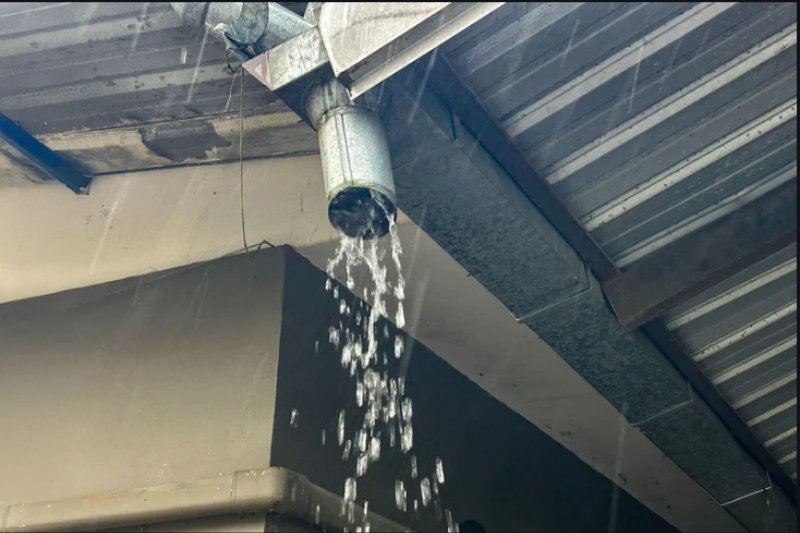
Clogged gutters can quietly cause serious damage by forcing water back onto the roof and down along the foundation. Over time, this leads to roof deterioration, basement moisture, mold growth, and even structural issues. Simple maintenance and early inspections can prevent small drainage problems from turning into costly repairs.
Gutters don't get much attention. They sit along the roofline, do their job quietly when they're working, and get noticed only when something goes wrong. For a lot of Michigan homeowners, that means gutters go unchecked from fall all the way through spring, accumulating debris, developing clogs, and setting the stage for water damage that could have been avoided with a straightforward maintenance routine.
The frustrating part is that gutter-related water damage is rarely dramatic in the way a burst pipe or a storm breach is. It builds slowly, often invisibly, over the course of weeks or months. By the time a homeowner notices a water stain on the ceiling or moisture along the basement wall, the gutter system has already been doing damage for longer than they realize.
April is when that damage tends to surface. Heavy spring rain combined with gutters that are still packed with fall leaves and winter debris creates overflow conditions that test every vulnerable point on the home's exterior. Understanding what's happening and what it can lead to is the first step toward getting ahead of it.
When a gutter is full of debris and water has nowhere to drain, it pools along the gutter trough and begins to back up toward the roof surface. On a properly functioning roof, water flows down and off. When it's held against the edge by a clogged gutter, it works its way backward under the bottom course of shingles and beneath the flashing at the roofline.
Over time, repeated backup events saturate the roof decking and underlayment at the eave. What starts as occasional moisture exposure becomes persistent water intrusion, and the decking begins to soften and deteriorate from below while the shingles above still look intact.
Clogged gutters are a direct contributor to ice dam formation, which remains a concern in Michigan through March and into early April. When gutters are packed with debris and can't drain freely, meltwater from the roof has nowhere to go. It refreezes at the cold eave line, builds up, and creates a dam of ice that forces subsequent meltwater back up under the shingles.
The damage from ice dams often doesn't become visible until spring, when the ice melts and the water that has been sitting behind it finds its way into the attic, ceiling, and wall cavities. By that point, the source of the problem has already thawed and disappeared, leaving homeowners with interior damage and no obvious explanation.
The fascia board is the trim piece that runs along the roofline and supports the gutter attachment. It is one of the first structural casualties of a chronically overflowing gutter system.
When gutters are clogged and water consistently overflows the back edge rather than the front, it runs directly behind the gutter and onto the fascia. Wood fascia that stays wet repeatedly softens, rots, and eventually loses its ability to hold the gutter securely. Once the fascia is compromised, the gutter begins to pull away from the roofline, which accelerates overflow and creates a widening gap where water can reach the soffit and roof edge above.
When a gutter overflows, the water it can't handle doesn't disappear. It falls from the roofline in an uncontrolled sheet and lands at the base of the home, directly adjacent to the foundation. On a home with properly functioning gutters, that water would have been directed to a downspout and discharged several feet away from the structure. Instead, it's concentrating at the worst possible location.
A single overflow event during a moderate rain can deposit a significant volume of water against the foundation. A full spring season of repeated overflow events, on a home where gutters haven't been maintained, saturates the soil around the foundation repeatedly and consistently.
Soil that is repeatedly saturated by gutter overflow loses its ability to drain effectively over time. As water accumulates in the soil adjacent to the foundation, it creates hydrostatic pressure against the basement walls and floor. That pressure:
Beyond the immediate pressure effects, repeated gutter overflow erodes the soil grading around the home's perimeter. Proper grading slopes away from the foundation, directing surface water out toward the yard. Sustained overflow from a clogged gutter system washes that grading away over time, eventually creating flat or inward-sloping ground that directs every rain event toward the foundation rather than away from it.
Once grading has been compromised by erosion, it doesn't correct itself. The overflow continues, the soil continues to erode, and the conditions around the foundation get progressively worse with each rain event until the grading is corrected and the gutter system is restored to proper function.
Water that enters a home at the roofline doesn't stay there. Once moisture breaches the roof edge and reaches the decking, underlayment, or attic space, it follows the path of least resistance downward through the structure. Depending on where the intrusion point is and how long it has been active, that water can travel through insulation, along rafters, and into wall cavities before it shows up as a visible stain on a ceiling or wall.
That travel distance is what makes gutter-related interior damage so difficult to trace and so easy to underestimate. By the time a homeowner notices a discolored patch on the ceiling, water may have been moving through the structure above it for weeks. The stain represents the end of the water's journey, not the beginning.
Moisture that enters through the roofline and moves into attic insulation, wall cavities, or ceiling assemblies creates exactly the conditions mold needs to establish itself. Warm temperatures, organic material, and sustained moisture combine quickly, and mold can begin growing within 24 to 48 hours of initial exposure.
The challenge with mold that develops from gutter-related intrusion is that it typically grows in concealed spaces first. Attic sheathing, the back side of drywall, and the interior of wall cavities are not areas homeowners can see during a routine inspection. By the time a musty odor or visible growth appears, the mold colony is already well established and the remediation scope is larger than it would have been if the moisture source had been identified earlier.
Prolonged moisture exposure from unaddressed gutter-related intrusion causes damage that goes beyond surface materials. Roof rafters and sheathing that stay damp repeatedly begin to soften and lose structural integrity. Wall framing that has been exposed to moisture cycling develops the same kind of deterioration over a longer timeline.
This category of damage is the most expensive consequence of gutter neglect because it involves the bones of the home rather than finish materials. Replacing a water-stained ceiling panel is a minor repair. Addressing compromised rafters or wall framing that has been deteriorating for a season or more is a significant structural project.
The sequence of gutter-related interior damage works against early detection. The intrusion starts at the roofline, a location most homeowners never inspect closely. It moves through concealed structural and insulation layers before it reaches a visible surface. And the visible surface where it finally appears, a ceiling stain or damp wall, is often far enough from the source that the connection to the gutters isn't obvious.
Gutter maintenance is one of the lowest-cost, highest-impact things a Michigan homeowner can do in spring. Cleaning a gutter system takes a couple of hours and costs nothing beyond the time invested. The damage a neglected gutter system can cause over a single spring season, from roofline deterioration to basement flooding to interior mold growth, can run into thousands of dollars and weeks of repair work.
If your home is showing any of the warning signs covered here, or if you know your gutters haven't been properly maintained heading into this spring, a free inspection from Titus Contracting Group gives you an accurate picture of where things stand. Whether the issue is limited to the gutters themselves or has already created water intrusion that needs professional attention, Titus serves homeowners across Shelby Township, Rochester, Auburn Hills, Orion Township, and the surrounding Michigan communities with the expertise and emergency availability to handle whatever the season brings.
Discover the latest strategies for effective water damage restoration and how our 24/7 emergency response can safeguard your home.

Delaying summer storm damage repairs into fall can allow minor roof, siding, gutter, and moisture problems to spread into more extensive damage. Addressing storm damage before winter can reduce repair costs, simplify insurance documentation, and protect the home from freeze-thaw conditions.

Michigan’s first freeze can expose hidden plumbing and foundation vulnerabilities, including uninsulated pipes, drainage problems, and existing cracks. Preparing these areas before temperatures drop can help prevent burst pipes, moisture intrusion, and costly winter damage.
.jpg)
A fall home inspection can uncover roof, gutter, foundation, plumbing, attic, and wildlife issues before Michigan’s winter weather makes them worse. Addressing small problems before freezing temperatures arrive can help prevent water damage, frozen pipes, structural concerns, and costly repairs.
