
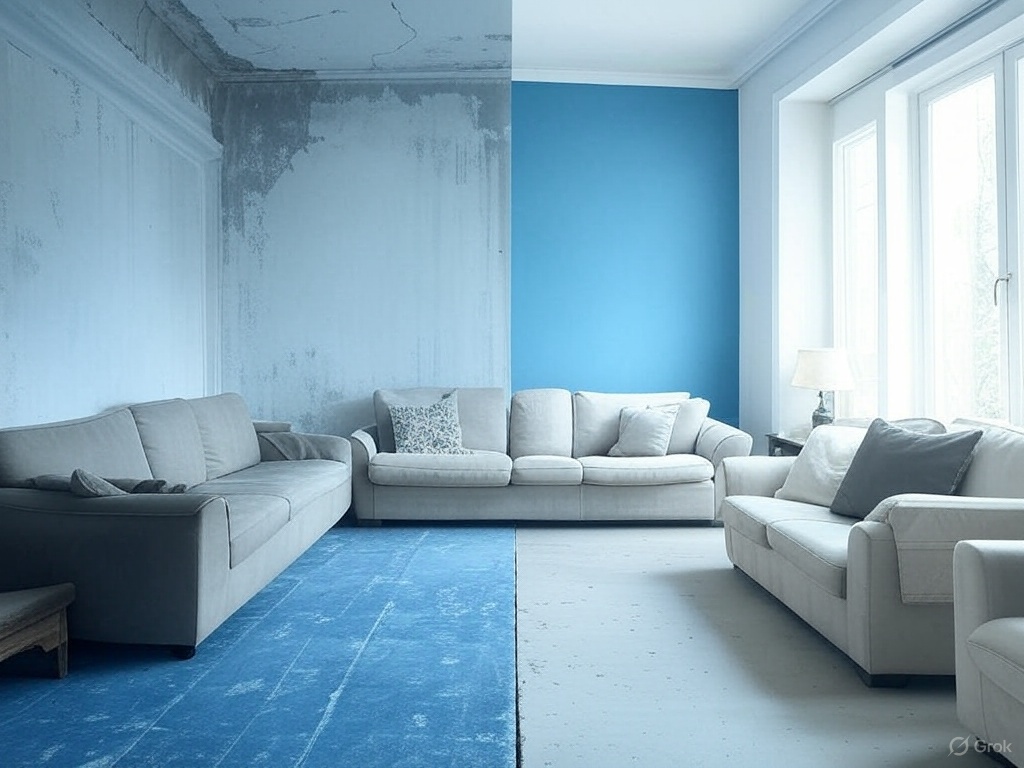
Water damage doesn't slow down while you figure out what to do next. A burst pipe, a failed water heater, a backed-up drain, or a storm that pushes water through a compromised roof can go from a manageable situation to a serious structural problem in a matter of hours. The speed at which water moves through a home, into walls, under floors, through insulation, and into framing, is something most homeowners don't fully appreciate until they're standing in the middle of it.
What makes water damage particularly difficult is that the visible portion of it is rarely the whole story. Water that soaks into drywall, travels along framing, and saturates insulation doesn't always announce itself with obvious staining or pooling. By the time a homeowner notices discoloration on a ceiling or a soft spot in the floor, the damage behind the surface has often been building for some time. Professional assessment is the only reliable way to understand the true scope of what you're dealing with.
Titus Contracting Group provides 24/7 emergency water cleanup and restoration for homeowners across Southeast Michigan. From the moment the call comes in through the final walkthrough, Titus manages the entire process, water extraction, drying, structural repairs, and insurance claim support, so homeowners can focus on getting their lives back to normal rather than trying to coordinate a complicated restoration on their own.
A burst pipe is one of the most common and most damaging water emergencies a homeowner can face. Pipes can burst due to freezing temperatures, age, corrosion, or sudden pressure changes. When they do, water can release at a rate that saturates a room within minutes. Even a slow pipe leak hidden inside a wall can cause significant damage over time before it becomes visible.
Household appliances are a frequent source of water emergencies. Common culprits include:
Sewage backups represent some of the most serious water emergencies because of the health risks involved. When drains back up and push contaminated water into a home, the cleanup process requires specialized equipment, protective protocols, and thorough disinfection. This is not a situation where standard water cleanup methods are sufficient.
Storms that damage roofing, flashing, or soffits create openings for water to enter the home. What starts as a drip through a ceiling can quickly become widespread interior damage if the breach isn't addressed. Storm-driven water intrusion often affects multiple areas of a home simultaneously, making it difficult for homeowners to assess the full scope without professional help.
Michigan's spring thaw and heavy rain seasons create significant groundwater pressure around residential foundations. When a sump pump fails, loses power during a storm, or is overwhelmed by volume, basements can flood rapidly. Finished basements with drywall, flooring, and stored belongings can sustain significant damage in a short period of time.
Overflows are often dismissed as minor incidents, but water that flows across a bathroom or kitchen floor for even a few minutes can migrate under flooring, into adjacent rooms, and down into subfloor materials. If the overflow involved a toilet, the contamination factor elevates the severity considerably.
Not every water emergency announces itself loudly. A slow leak behind a wall, under a sink, or around a window frame can go undetected for weeks or months. By the time visible signs appear, such as a soft floor, a bubbling paint surface, or a musty odor, the damage is already extensive. At that point, what began as a minor drip has become an emergency that involves saturated building materials, potential mold growth, and possible structural deterioration.
Category 1 water originates from a sanitary source, such as a supply line, a faucet overflow, or rainwater that has not contacted contaminated surfaces. While it is the least hazardous category, clean water still requires professional attention. Without proper extraction and drying, Category 1 water will degrade materials, promote mold growth, and potentially migrate into areas where it contacts contaminated surfaces and escalates to a higher category.
Gray water contains significant contamination and carries a risk of causing illness upon exposure. Sources include:
Black water is the most hazardous category and involves grossly contaminated water that contains pathogenic agents, toxins, or other harmful substances. Sources include:
The process begins with a thorough assessment of the affected area. This includes:
Once the assessment is complete, extraction begins. Professional water extraction uses truck-mounted or portable extraction units that remove standing water far more effectively than wet vacuums or consumer-grade equipment. Thorough extraction at this stage reduces drying time significantly and limits how far moisture has penetrated into building materials.
Materials that have absorbed water beyond the point of effective drying must be removed before the structural drying phase begins. This typically includes:
After extraction and material removal, industrial air movers and dehumidifiers are deployed throughout the affected area. This equipment operates continuously and is significantly more powerful than anything available to consumers. The drying phase can take several days depending on the extent of saturation, the materials involved, and the ambient conditions in the home.
Antimicrobial agents are applied to affected surfaces to inhibit mold growth and address bacterial contamination. The type and extent of treatment depends on the water category. For gray and black water events, thorough disinfection of all contacted surfaces is a required part of the process, not an optional add-on.
Before any rebuilding or finishing work begins, moisture levels in all affected materials must be verified as having returned to acceptable ranges using calibrated moisture meters. Restoring over materials that still hold elevated moisture is one of the most common causes of mold problems that develop after what appeared to be a completed cleanup. Verification is not optional. It is the checkpoint that separates a properly completed cleanup from one that will cause problems later.
Household fans, dehumidifiers, and wet vacuums are not designed for structural drying. They move air at the surface level but do not have the capacity to remove moisture from inside wall cavities, subfloor assemblies, or concrete. Using them in place of professional equipment gives the appearance of drying while leaving moisture behind in the places that matter most.
Water damage moves faster than most homeowners expect, and it does not pause while decisions are being made. The difference between a water event that results in a straightforward cleanup and one that turns into a months-long restoration involving mold remediation, structural repairs, and a complicated insurance dispute often comes down to how quickly the right help arrived. That window is real, and it is short.
If water damage has affected your home, the time to act is now. A free inspection costs nothing and gives you a clear, honest picture of what you are dealing with before any commitment is required. Whether you are in the middle of an active emergency or you discovered damage that has been building for some time, Titus is ready to help.
Titus Contracting Group provides 24/7 emergency water cleanup and restoration for homeowners across Shelby Township, Rochester, Auburn Hills, Orion Township, Oakland Charter Township, and the surrounding Michigan communities.
