In Michigan, winter doesn’t just test your patience—it tests your roof. One windy night. One heavy snowfall. One week of freeze/thaw swings. That’s all it takes for a small, invisible weakness to turn into a very real emergency: water dripping through a ceiling, insulation soaked in the attic, a sagging drywall bubble that looks like it’s about to burst, or a musty smell that shows up overnight and refuses to leave.
The good news is that roofs usually give clues before they fail in a big way—you just need to know what to watch for, and where. That includes the obvious (missing shingles after a windstorm), but also the less obvious: granules collecting at downspouts, gutters pulling slightly away from the fascia, icicles forming in heavy clusters, uneven snow melt patterns along the roofline, or dark staining on attic wood during a thaw. Even if you never climb a ladder, a lot can be spotted safely from the ground with a slow walk-around and a careful look at your ceiling and attic.
A Safe Winter Roof Inspection Checklist for Michigan Homeowners
What to do from the ground
A slow, careful scan with binoculars can reveal more than you’d expect.
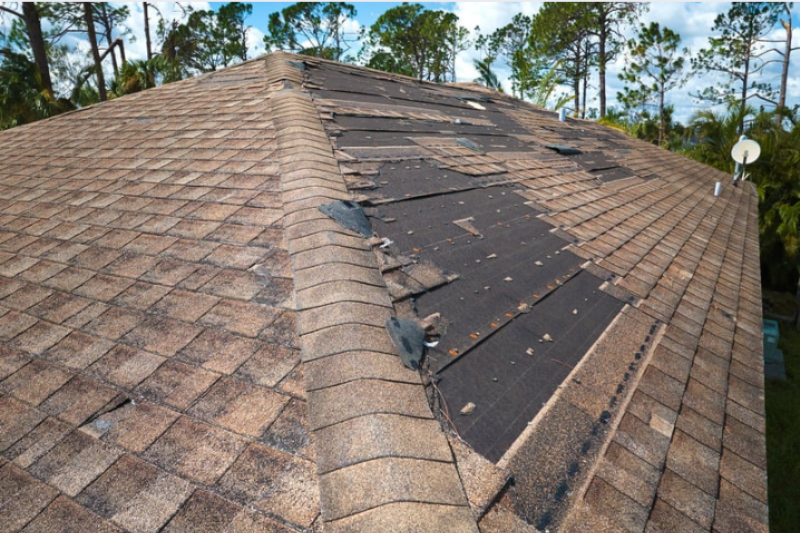
- Scan roof planes for missing, lifted, or raised shingles
- Check valleys for debris buildup (leaves, branches, ice piles)
- Look at flashing lines around chimneys and vents for separation or warping
- Spot uneven snow melt patterns (possible heat loss and ice dam risk)
What to check around the perimeter
Walk the outside perimeter of your home and look at how water is being managed.
- Gutters: clogs, bowing, pulling away from fascia
- Fascia/soffit: water staining, rot, peeling paint, and animal entry points
- Downspouts: confirm discharge goes away from the foundation (standing water near the base can create basement and crawl space issues, too)
What to check inside
This is often the best “confirmation step.”
- Use a flashlight and look for damp wood, staining, frost, wet insulation
- Check after storms and during thaws (that’s when active leaks show themselves)
- Note the location of any stains or wet spots to help professionals track the likely entry point
Ice Dams and Roof Leaks
What ice dams are
Ice dams are one of the most common reasons a roof that “seems fine” suddenly starts leaking in the middle of winter. The basic chain reaction looks like this:
- Warm attic air melts the snow sitting on the upper roof surface.
- That meltwater runs downhill toward the edge of the roof, where temperatures are colder.
- At the eaves, the water refreezes, creating a thick band of ice.
- Over time, the ice builds into a ridge—a “dam.”
- When more snow melts, water can’t drain off the roof normally, so it backs up under shingles and finds its way into the roof system and interior.
Signs you’re developing ice dam risk
Ice dams don’t always show up as an obvious wall of ice at first. Often, the early signs are patterns—things happening in the same places after every storm or thaw.
- A thick ridge of ice at the eaves:
If you consistently see a solid ice line along the roof edge, especially after snow, your roof edge is refreezing meltwater instead of draining it. - Icicles + uneven roof snow melt:
Icicles by themselves aren’t always a crisis, but when you see heavy icicles paired with uneven melting (bare patches near the upper roof while snow remains at edges), it suggests heat is escaping into the attic and melting snow from above. - Water staining at exterior walls/ceilings near eaves:
Stains that appear near the perimeter of rooms—especially on exterior-facing ceilings or upper wall corners—can be classic ice dam leak indicators. The leak often shows up far from the ice buildup because water travels before it drops.
Prevention steps that actually work
The goal with ice dams is simple: keep the roof surface cold and keep water draining correctly. That usually means addressing the attic environment and the roof edge drainage.
- Attic insulation + air sealing (keeping the roof cold):
If warm indoor air is leaking into the attic, it warms the roof deck and starts the melt/freeze cycle. Air sealing (around attic penetrations like lights, fans, plumbing stacks, and attic hatches) plus proper insulation helps reduce that heat loss. - Ventilation balance (intake + exhaust):
Ventilation helps carry away heat and moisture. It’s not just “more vents”—it’s balanced airflow: cooler air coming in at the soffits (intake) and exiting at ridge/roof vents (exhaust). Poor ventilation can also increase condensation, which adds its own moisture issues. - Gutter management before winter hits:
Gutters and downspouts that are clogged or poorly draining make ice dam risk worse because water has nowhere to go. Clearing debris and confirming downspouts are working properly before winter can prevent the backup that contributes to edge freezing.
Snow Load Damage
Understanding snow load risk
Snow load isn’t just “how much snow fell.” It’s how much weight is sitting on your roof, how evenly it’s distributed, and whether it’s changed into heavier forms.
- How snow weight adds up (especially wet snow):
Wet, dense snow can weigh dramatically more than light, fluffy snow. When snow partially melts and refreezes, it can form heavier layers and ice crusts that add stress over time. - Why drifts form:
Snow doesn’t land evenly. Wind patterns, roof geometry, nearby trees, dormers, and valleys all create drift zones. Drifts are important because they create uneven loading—a major factor in roof strain.
Common snow-load stress locations
Certain roof areas naturally carry more risk during heavy accumulation—especially when older construction or previous moisture damage is already in play.
- Valleys and low-slope sections:
Valleys collect snow and ice, and low-slope sections hold snow longer, increasing both weight and the chance of meltwater backup. - Additions, overhang transitions, attached garages:
Where rooflines intersect or change height, snow tends to collect. Attached garages are often built differently than the main home, and sometimes have lighter structural design. - Older roof systems and weakened decking:
If a roof has had repeated moisture exposure, the decking can weaken. A heavy snow event can turn a “borderline” area into a noticeable sag or leak.
Warning signs of snow-load strain
These signs can feel subtle at first—then suddenly become obvious once you know what they mean.
- New sagging lines:
A roofline that looks like it’s dipping where it didn’t before is a red flag, especially after heavy snow or ice buildup. - Popping sounds, cracking drywall, sticking doors (extreme cases):
These can indicate structural stress. They don’t always mean imminent collapse, but they do mean the home is reacting to load changes and should be evaluated quickly. - Interior leaks appearing after heavy accumulation:
If leaks show up after snow has been sitting for a while—especially after a thaw—snow load and ice-related backing may be contributing.
When snow removal is appropriate—and when it’s dangerous
Snow removal can reduce risk in some scenarios, but it has to be done safely.
- Ground-based roof rakes (safe use tips):
A roof rake lets you remove snow from the edge without climbing. The goal is usually to clear the first few feet near the eaves to reduce ice dam formation—not to strip the whole roof. - Avoiding damage to shingles and gutters:
Be cautious not to scrape down to bare shingles aggressively, and avoid yanking at ice or catching the rake on gutters. - When to call pros:
If the roof is steep, high, covered in heavy ice, or showing signs of strain (sagging, active leaking), professional help is the safer move. The risk of falls and accidental roof damage goes up fast in winter conditions.
Catch Roof Damage Early—So Winter Doesn’t Catch You Off Guard
Michigan winter has a way of taking a “small roof issue” and turning it into a same-day emergency. A slightly lifted shingle becomes an entry point when wind-driven snow hits. A little flashing gap becomes a leak when meltwater backs up under an ice dam. A clogged gutter becomes a roof-edge problem during the next thaw. And because winter damage often shows up intermittently—only during windy storms or temperature swings—homeowners can miss the warning signs until the ceiling stain spreads or the attic insulation is already soaked.
Concerned About a Winter Roof Leak? Call Titus Contracting 24/7

.jpg)
