
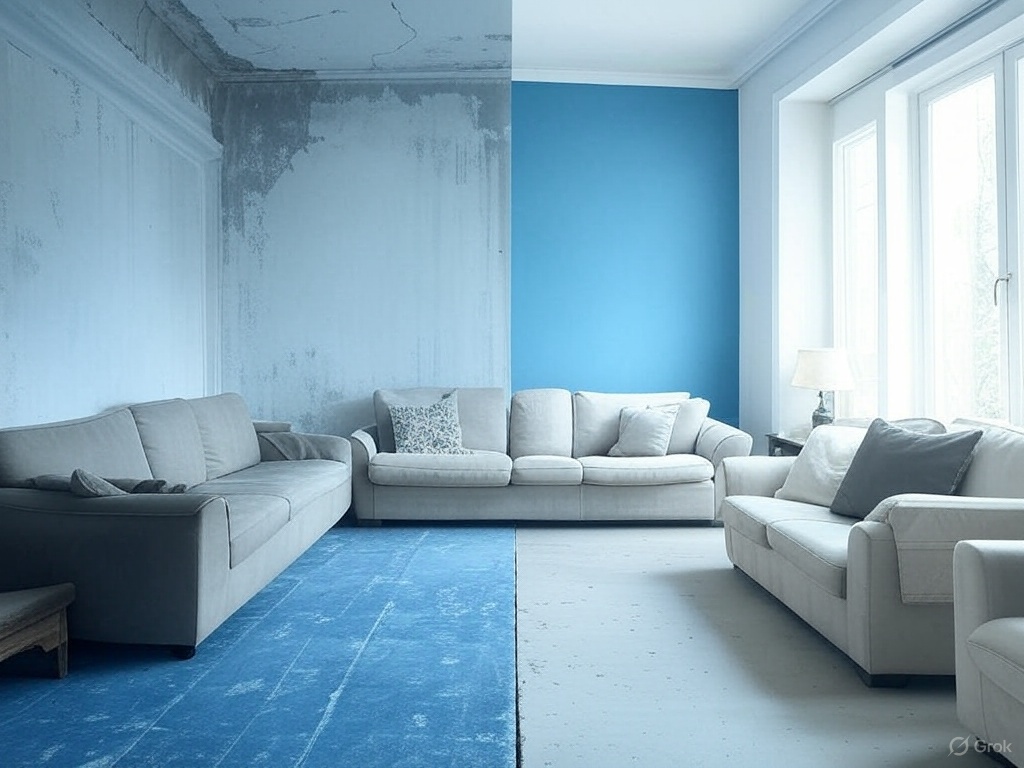
When you type “water damage restoration near me” into a search bar, you’re not just browsing—you’re looking for help right now. Maybe a pipe burst in the middle of the night, maybe your basement is taking on water during a storm, or you just walked into a soaked living room after a supply line failed. Whatever the situation, you need a local team that can respond quickly, stop the damage, and guide you through what comes next.
With water damage, minutes matter. The longer moisture sits, the deeper it seeps into structural elements and the greater the risk of mold growth, warped floors, and ruined drywall. What might be a manageable cleanup in the first few hours can turn into a major project if you wait days to act.
That’s where Titus Contracting comes in. As a trusted, Michigan-based restoration company, Titus offers 24/7 water damage restoration throughout Bruce Township and surrounding communities. When you call, you’re connected with a local team that knows our climate, understands freeze-thaw plumbing issues, and has the equipment and expertise to stabilize, dry, and restore your property as quickly and safely as possible.
Water damage doesn’t wait for business hours, so neither do we.
As soon as you call, our team mobilizes for fast arrival to help stabilize the situation and prevent things from getting worse. The first few minutes and hours after a leak, flood, or burst pipe are critical, and our goal is to stop the damage from spreading.
On site, we start with safety checks, looking for:
Once we’re sure it’s safe to proceed, we work to identify the water source and shut it off when possible—whether that’s a broken supply line, leaking appliance, or backed-up drain.
We then categorize the water:
Finally, we map the affected areas, noting everywhere the water has spread. This gives us the roadmap for extraction, drying, and restoration.
Next, we tackle the most urgent problem: standing water.
Using professional extraction equipment, we remove pooled water from:
Rapid extraction matters because the longer water sits, the more it soaks into:
Once the visible water is gone, we turn our attention to what you can’t see.
We use moisture meters and thermal imaging to locate hidden water behind walls, under floors, and inside structural components. This step often reveals moisture far beyond the obvious wet areas.
From there, we determine:
Now we focus on getting the structure truly dry.
We set up commercial air movers and dehumidifiers in a strategic layout to create controlled airflow and humidity reduction. The goal is to pull moisture out of building materials and remove it from the air.
We specifically target:
As conditions change, we adjust equipment and containment—moving air movers, tweaking dehumidifier settings, and using plastic sheeting or barriers to direct airflow. This ensures efficient, even drying across all affected areas.
Water damage often leaves behind more than just moisture.
We clean surfaces to remove dirt, residues, and any contaminants carried in by the water. In cases involving gray or black water, we apply EPA-registered disinfectants to kill bacteria and help make the environment safe again.
Dampness can also leave musty odors that linger long after the water is gone. We address this by:
Once everything is dry and sanitized, it’s time to put your space back together.
Depending on the extent of the damage, this can include:
If electrical systems, HVAC components, or other trades are involved, we coordinate with electricians or other licensed professionals to ensure everything is safe and up to code.
There’s a big difference between “surface dry” and structurally dry.
Why does that matter? Because framing, subfloors, and wall cavities are the core of your building. If they stay wet:
To get structures truly dry, Titus Contracting relies on specialized equipment—not just household fans.
We use:
For tough or hidden moisture, we deploy:
Drying isn’t something we “set and forget.” It’s actively managed.
Each day, our team:
We also record progress—moisture levels, photos, and notes—throughout the project. This documentation:
Water damage is always a race against the clock. The longer moisture sits in your home or business, the more it seeps into framing, subfloors, walls, and personal belongings—putting your structure, contents, and health at risk. What starts as a “small leak” can quickly turn into warped floors, ruined drywall, mold growth, and costly repairs if it’s not handled the right way, right away.
Professional water damage restoration is the safest and most effective path to a full recovery after leaks, floods, storm damage, or plumbing failures. Instead of just drying what you can see, certified restoration tackles the entire problem: hidden moisture, structural drying, sanitation, odor control, and long-term prevention. It’s the difference between a quick cleanup and a true solution.
That’s exactly what Titus Contracting delivers. As a local Michigan company, Titus offers 24/7 emergency response and comprehensive services—from water extraction and structural drying to cleaning, disinfection, and rebuild. They understand the unique challenges of homes and businesses in Bruce Township, Orion Township, Rochester, Auburn Hills, Oakland Charter Township, Shelby Township, and surrounding areas.
With 24/7 availability and dependable service across Bruce Township, Orion Township, Rochester, Auburn Hills, Oakland Charter Township, Shelby Township, and nearby Michigan communities, you’re never on your own when water strikes.
Contact Titus Cotnracting today:
